




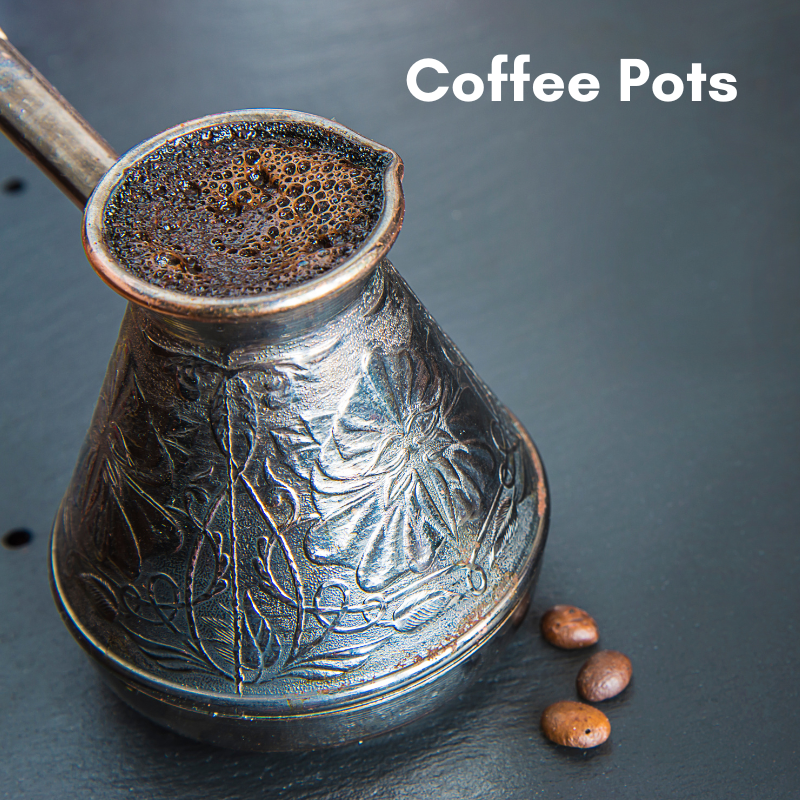
Turkish coffee needs only three things: a cezve, very finely ground coffee and a low heat. Few drinks are as closely tied to daily life in Turkey. Turkish coffee culture and tradition was added to UNESCO's list of intangible cultural heritage in 2013.
The language reflects it. The Turkish word for breakfast, kahvaltı, comes from kahve altı, literally "under coffee": the meal you eat before your coffee. And French speakers may recognise kahve, the Turkish word for coffee, in kawa, their everyday slang for a cup.
The cezve: a pot made for one job
Turkish coffee is brewed in a small pot with a long handle and a narrow neck, called a cezve in Turkey and a turka in Eastern Europe. The narrow neck is not decorative: it concentrates the foam as the coffee rises.
Cezves are traditionally made of copper or clay. Copper heats quickly and evenly, which gives you fine control over the foam. Clay heats more slowly and holds the heat longer.
This way of making coffee has spread from Greece to Uzbekistan, through the Caucasus, Russia and Ukraine. The cezves in our collection come from these Russia and Turkey, where almost every kitchen has one.
How to make Turkish coffee,step by step
For each cup you need one heaped teaspoon of coffee and one coffee cup of cold water.
-
Grind the coffee as fine as possible. It should feel like flour between your fingers. Purists use freshly roasted beans, ground just before brewing.
-
Measure the water with the cup you will serve in. Use cold, freshly drawn water, ideally low in calcium. Fill the cezve up to the base of the neck, no higher: the foam needs room to rise.
-
Add the coffee to the cold water. Add sugar now if you take it: never once the coffee is made.
-
Stir well, then stop. Mix until the grounds are fully wet, then leave the coffee alone. Stirring during heating breaks up the foam.
-
Heat slowly over a low flame. A slow heat gives the foam time to build.
-
Take the cezve off the heat when the foam rises. Let the foam settle, then put it back on the heat until it rises again. The larger the cezve, the more times you repeat this step.
-
Spoon the foam into each cup, then pour. Wait a minute before drinking, so the grounds settle at the bottom of the cup.
The golden rule: never let it boil
Boiling ruins Turkish coffee. It turns bitter, loses its aroma and the foam collapses.
The foam is the sign of a well-made cup. It should be thick and firm, and hold its shape on a spoon dipped into the cezve rather than spreading out.
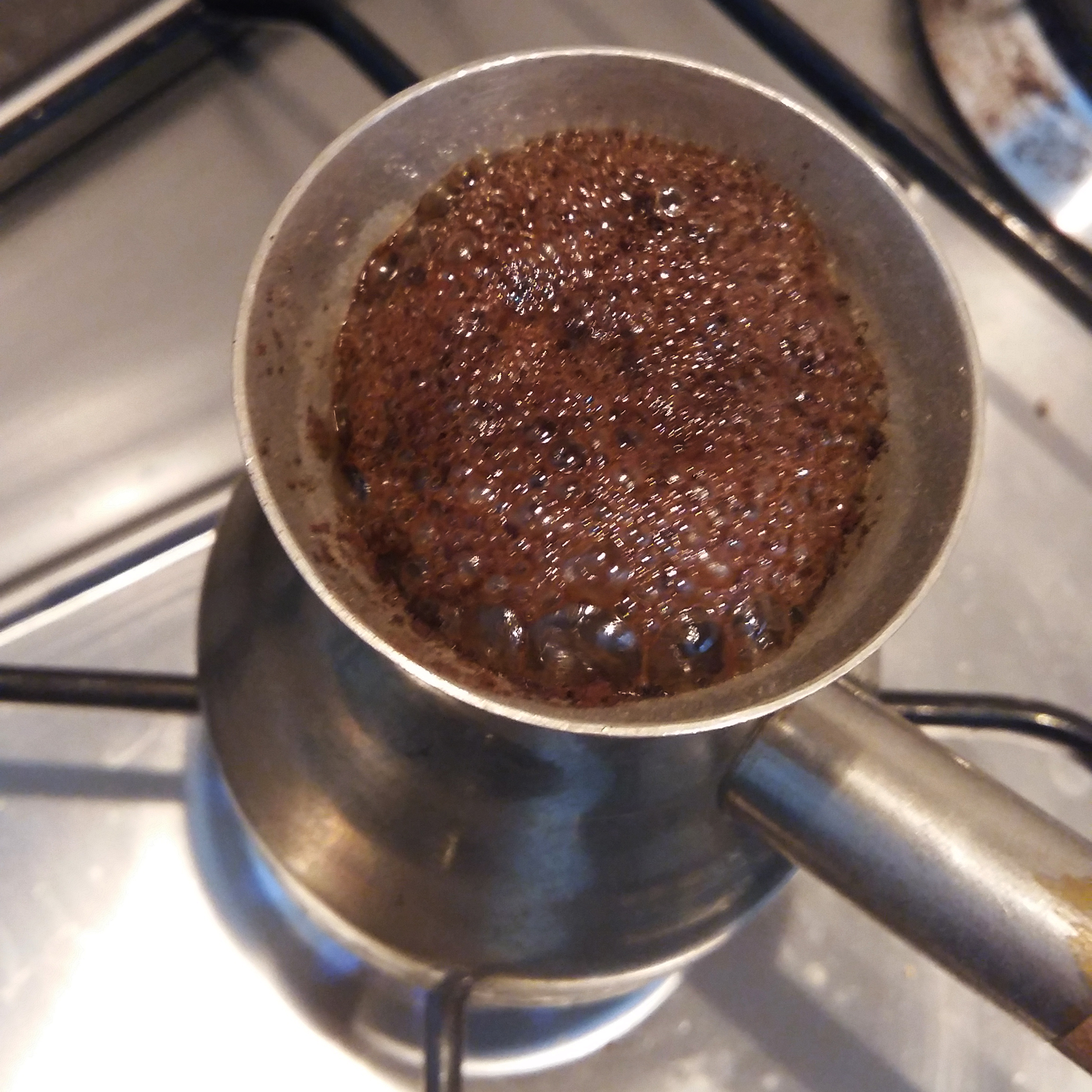
Thick, firm foam: the sign of a well-made coffee
In Turkey, coffee is served with a glass of water. You drink the water first, to cleanse the palate and taste the coffee fully.
The sand method
Before stoves were common, the cezve was set into a tray of fine sand heated over the fire. The sand surrounds the pot and spreads the heat evenly. Moving the cezve deeper into the sand or back towards the surface controls the temperature.
Today only a few cafés and enthusiasts still brew this way.
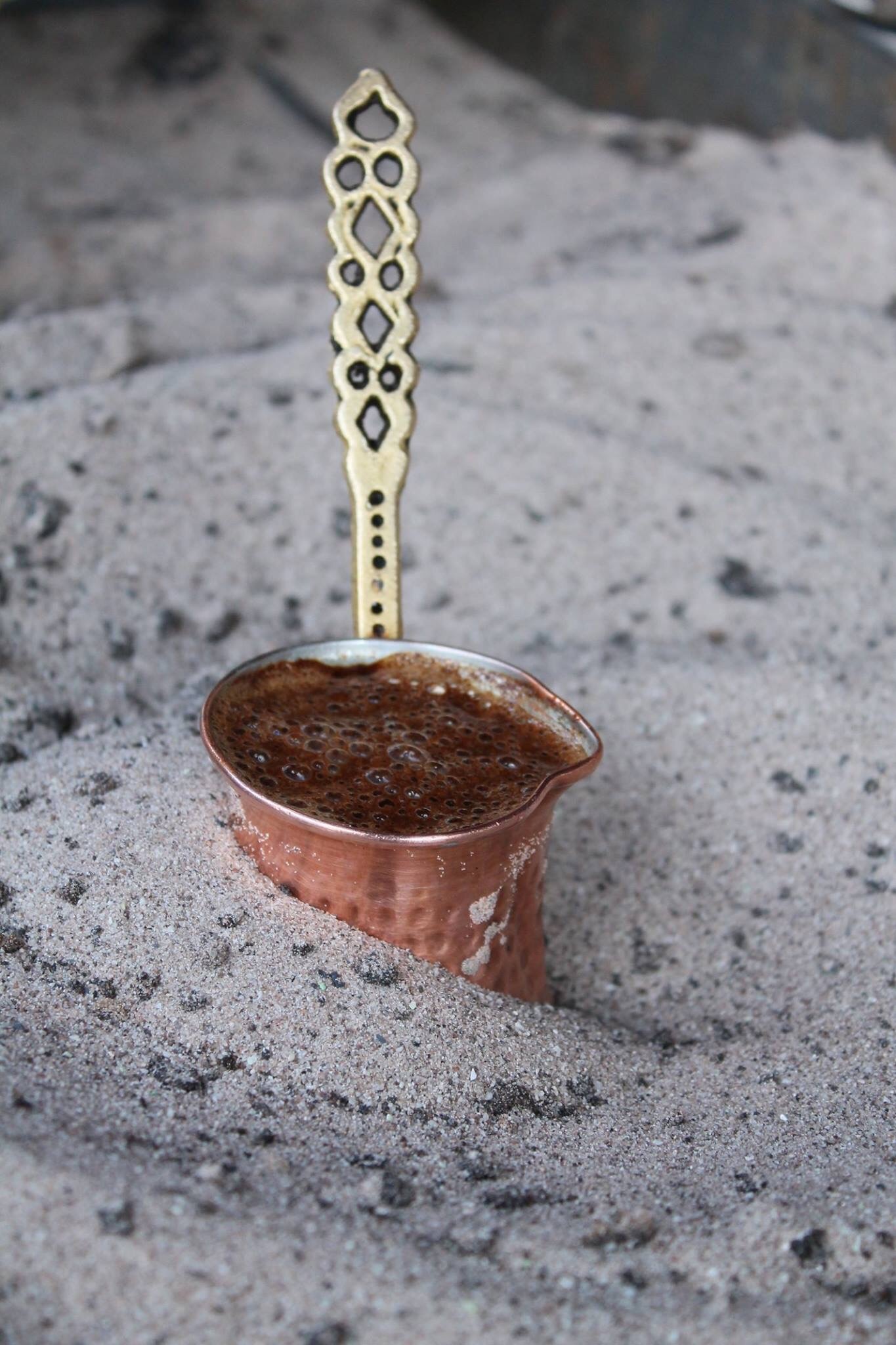
Traditional method of brewing coffee in hot sand
(Photo credit: www.pixabay.com)
Sugar and spices
In Turkey, you choose your sugar level when you order. It is added to the cold water before heating, so it cannot be changed afterwards:
- sade: no sugar
- az şekerli: a little sugar
- orta: medium
- şekerli: sweet
Spices go in at the same stage. Cardamom is the most common addition. Cinnamon and vanilla also work well.
Turkish coffee outdoors
A cezve is small, light and needs no filter or electricity, which makes it well suited to camping, hiking and vanlife.
- On a camping stove: turn the flame as low as it goes. Small burners run hot, so watch the foam closely.
- Over a campfire: set the cezve on embers, not in the flames. The sand method works on the same principle.
- Never heat an empty cezve. Copper cezves are usually lined with tin, which can melt at high temperature.
- Grind before you leave. Store the coffee in an airtight tin to keep its aroma.
Frequently asked questions
- What is the difference between a cezve and a turka? None. Cezve is the Turkish name; turka is the name used in Russia, Ukraine and much of Eastern Europe. In English, the pot is also called an ibrik.
- How much coffee do I need per cup? One heaped teaspoon of very finely ground coffee per coffee cup of cold water.
- Can I use regular ground coffee? Not really. Filter or espresso grinds are too coarse: the coffee will not foam and the grounds will not settle. Look for coffee labelled for Turkish coffee, or grind it to a flour-like powder.
- Should I stir Turkish coffee while it heats? No. Stir only at the start, to mix the coffee into the cold water. Stirring while it heats breaks up the foam.
- Why should Turkish coffee never boil? Boiling makes it bitter, destroys its aroma and collapses the foam.
- When do I add sugar? Before heating, in the cold water. Sugar cannot be added once the coffee is made.
Your turn
Try your own variations, and share your recipes with us.