
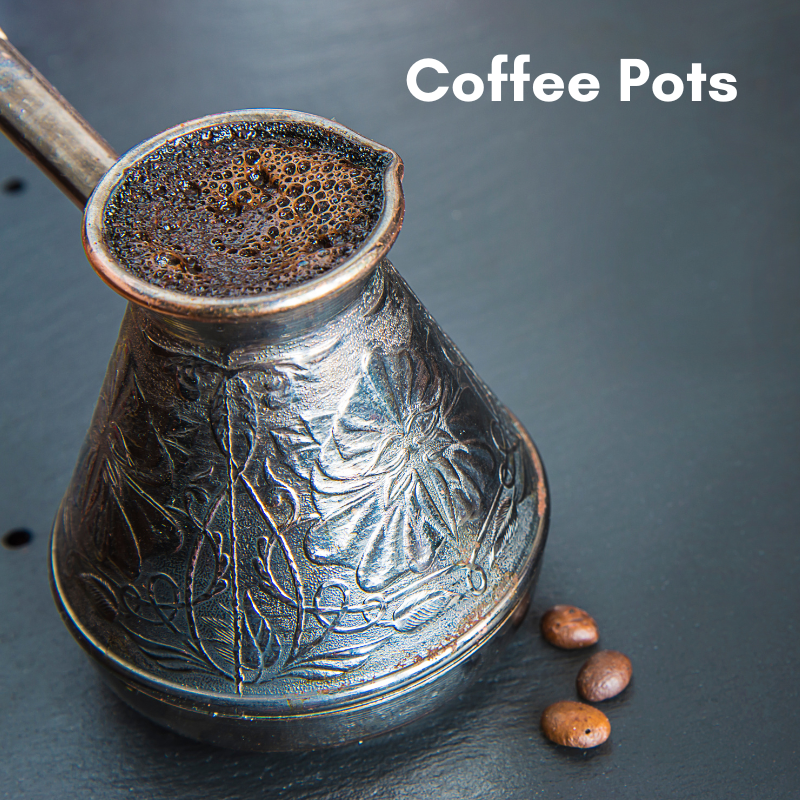
You find it in kitchens, bathrooms and hiking packs, often without giving it a second thought. Yet enamelled steel has a long history, and properties that explain why it is still in use today. Here are ten things to know about it.
1. Enamel began as decoration
The oldest known enamelled objects are Mycenaean rings found in Cyprus, dating from the 13th century BC. For centuries, enamel was reserved for jewellery and precious objects, as a way of imitating the sparkle of gemstones. It later adorned Byzantine icons, then the reliquaries and plaques of Limoges, famous from the 12th century. In China, the oldest pieces that can be reliably dated go back to the early 15th century.
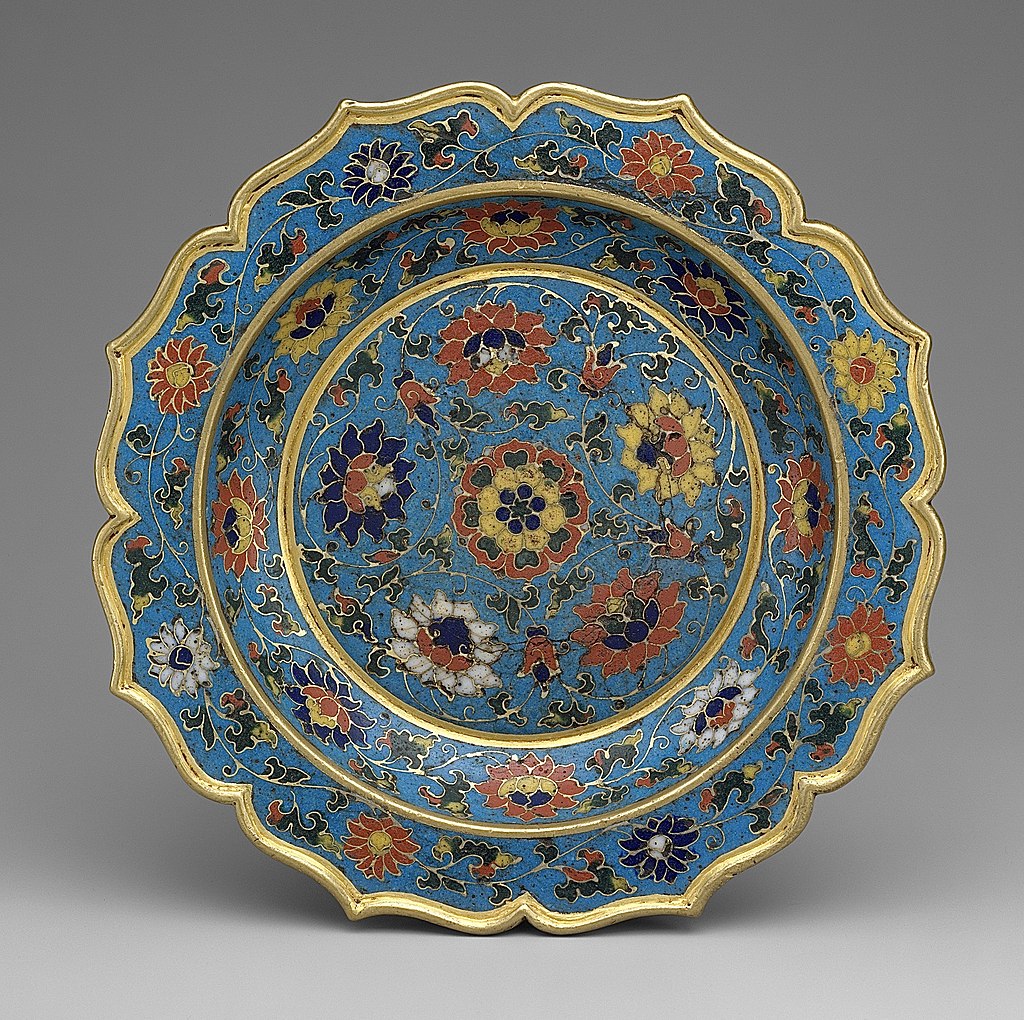
Enamelled dish, China, early 15th century – Metropolitan Museum of Art, CC0, via Wikimedia Commons
2. Enamelling takes around 800 °C
Enamel is a glass powder melted onto metal. It has to be fired at roughly 750 to 850 °C to melt, spread and bond. That takes a suitable kiln and carefully controlled firing to produce an even coat.
3. Enamel cookware was born in 18th-century Germany
From the 1760s, enamel began to play a technical role rather than a purely decorative one. The first enamelled iron vessels were produced in 1785 at Lauchhammer, in Saxony. These were enamelled cast iron: thick, heavy pieces.
4. The early days were uncertain
The technique remained hard to master for a long time. Industrial production only began in Germany around 1840, with methods that were still rudimentary. By 1870, enamelling was still almost entirely limited to cast iron pots.
5. Steel changed everything
Advances in metallurgy in the 19th century transformed the industry. Around 1850, Germany and Austria began enamelling sheet iron and steel. Steel can be worked into thin sheets, takes any shape and enamels well. Cookware became lighter and cheaper, and found its way into homes everywhere in the late 19th and early 20th centuries.
6. A tough material, with its limits
Enamelled steel is used for cookware and pans, but also for bathtubs, sinks and washbasins. Its main strengths:
- It protects steel from rust, as long as the enamel is intact.
- It withstands heat, including direct flame.
- It resists abrasion and most chemicals.
- It is impermeable: non-porous enamel holds on to neither water, smells nor flavours.
- It is easy to clean: dirt has nothing to cling to on its smooth surface.
- It comes in a wide range of colours and patterns.
Its limits: enamel is a form of glass. A hard knock can chip it, as can a sudden change in temperature, such as cold water poured into a very hot pan. Where the enamel is chipped, the exposed steel can rust.
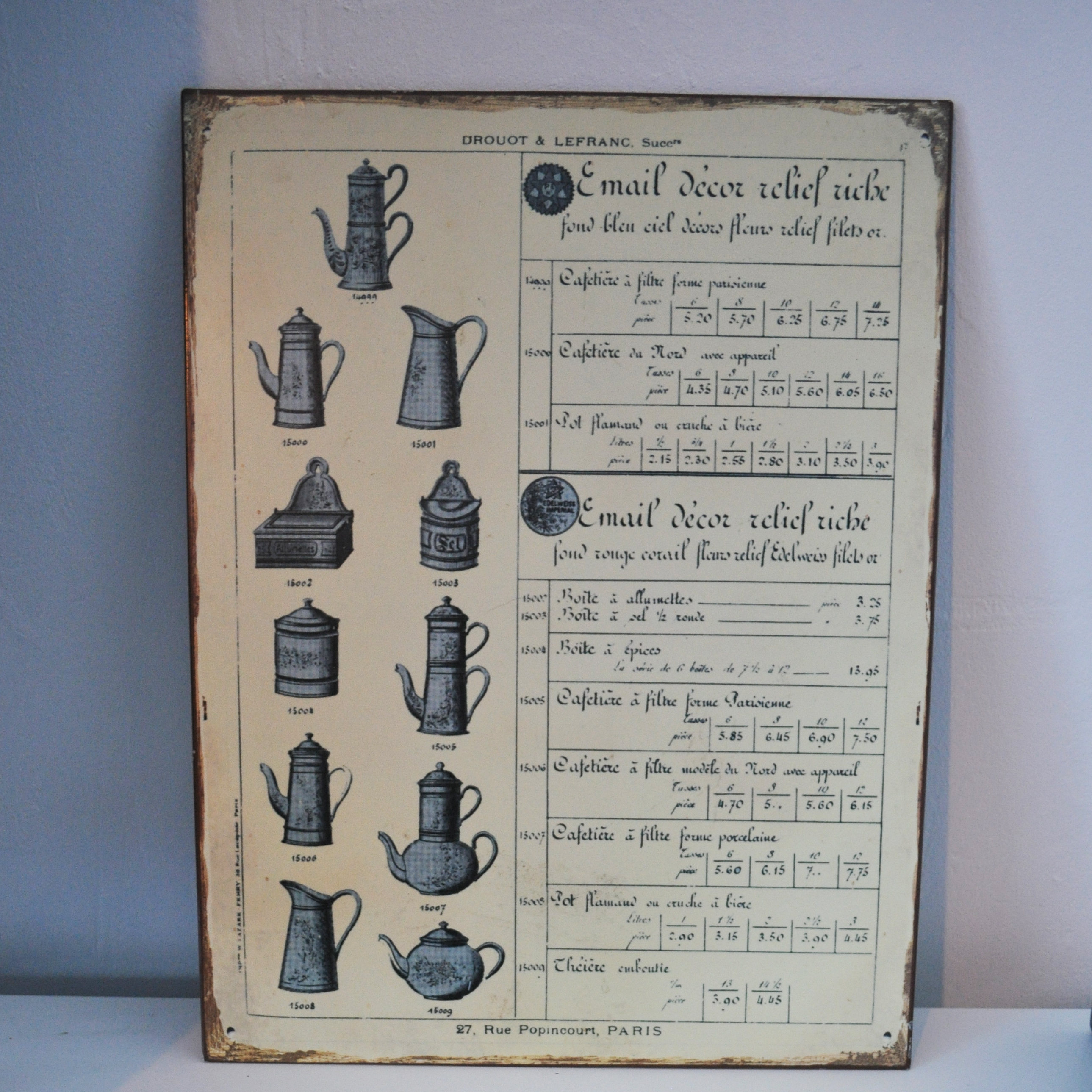
Enamel advertising sign promoting… enamel cookware – private collection
7. Enamel is a form of glass
Like all glass, enamel is mainly made of silica. But glass alone would not hold on steel: other ingredients are added so that it melts at a lower temperature and expands at the same rate as the metal. Without that match, the enamel would crack or chip. The result is a hard, smooth, non-porous layer, firmly bonded to the steel.
8. It suits today's kitchens
An enamelled steel pan goes from campfire to gas hob or ceramic hob. Since steel is magnetic, most flat-bottomed pieces also work on induction: check the label on each product. Two rules: never heat an empty pan, and never put enamelware in the microwave.
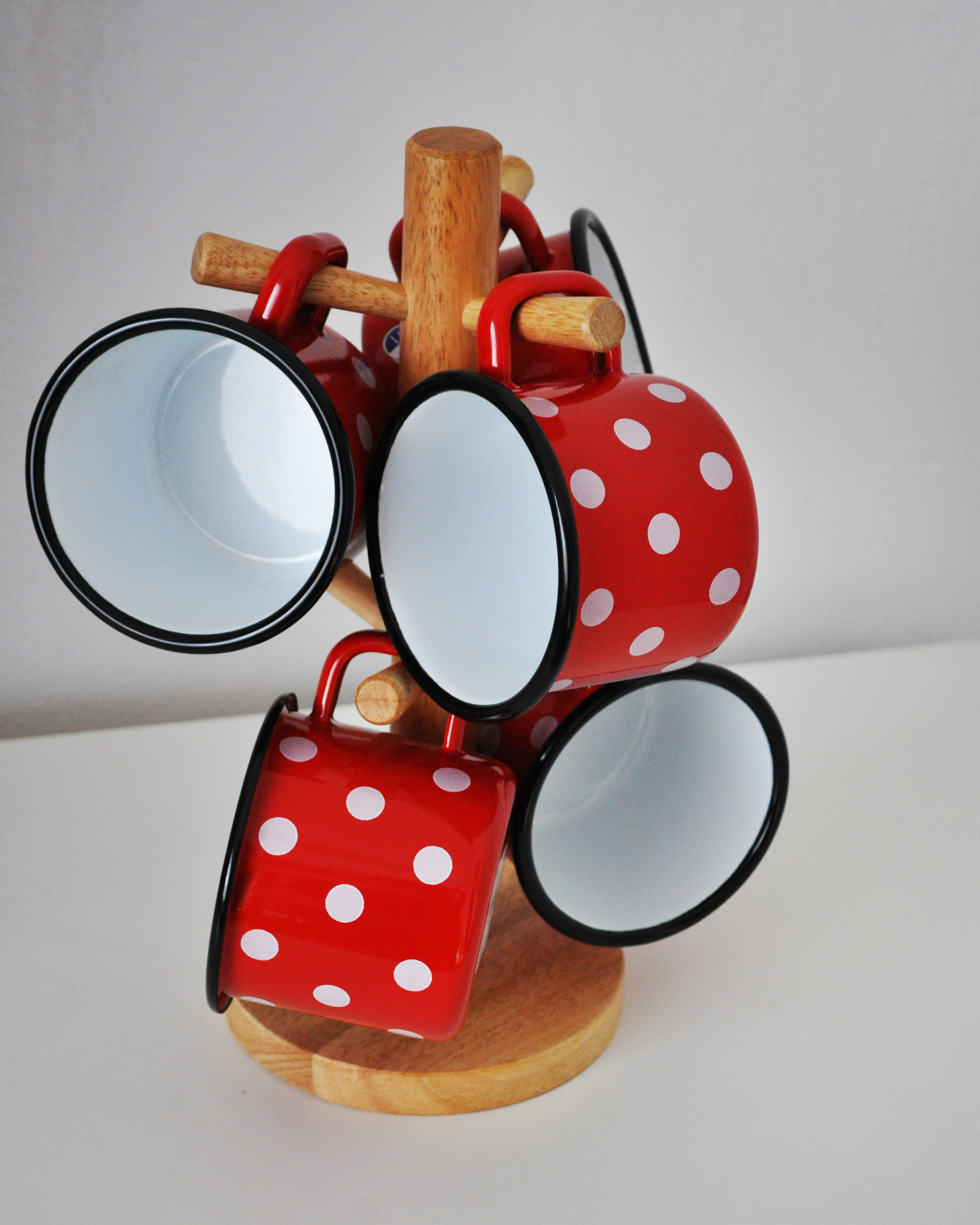
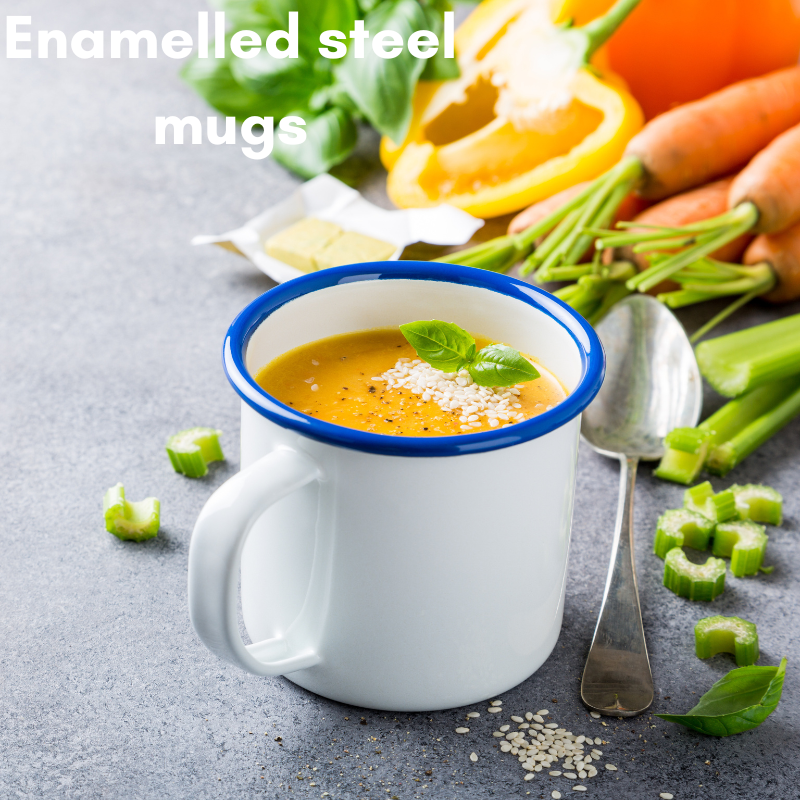
Enamel mugs
9. It lasts and can be recycled
Looked after properly, a piece of enamelled steel can last for decades, as the old pieces found at flea markets show. At the end of its life, the steel can be recycled with other metals.
10. You find it almost everywhere
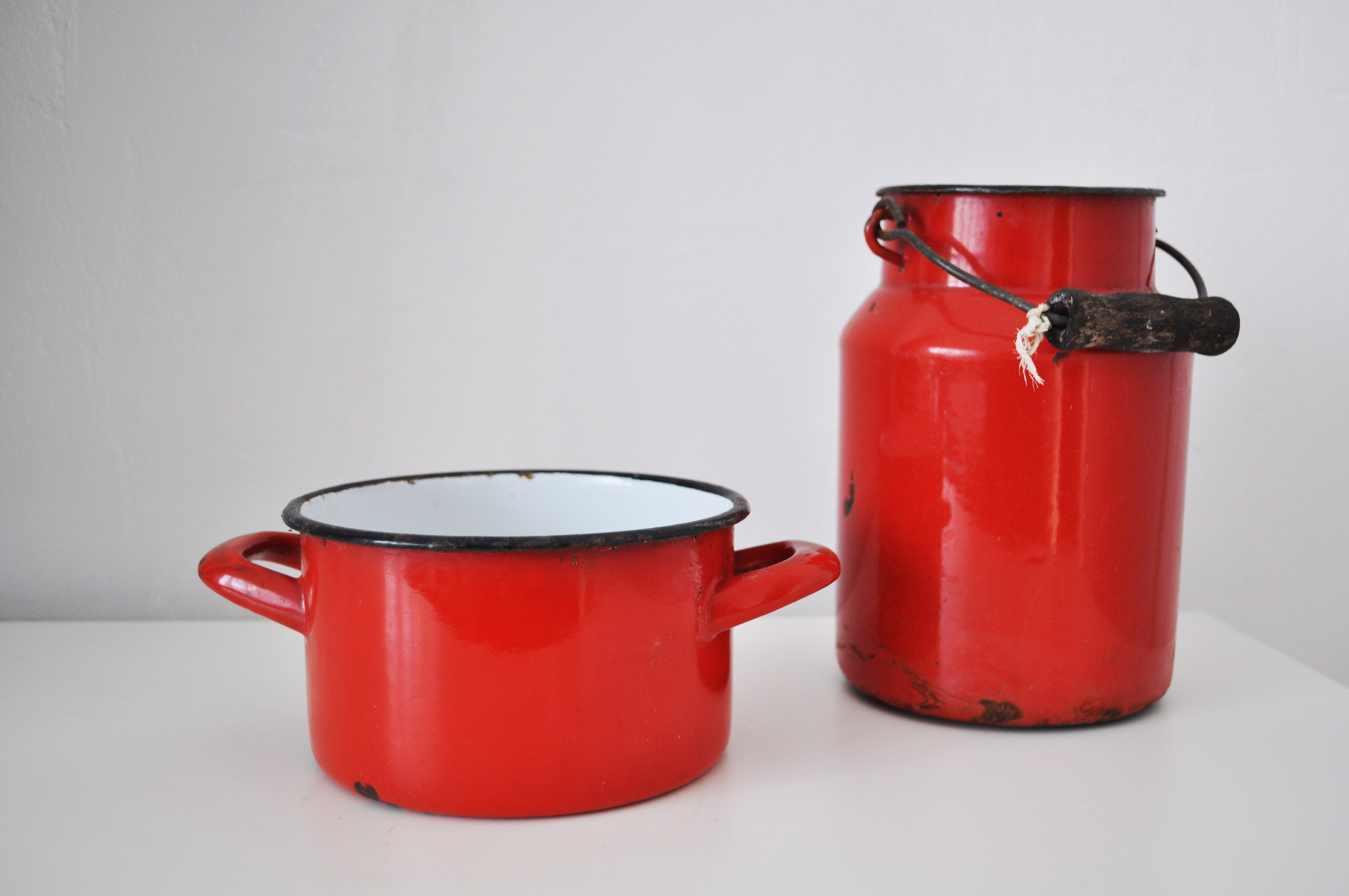
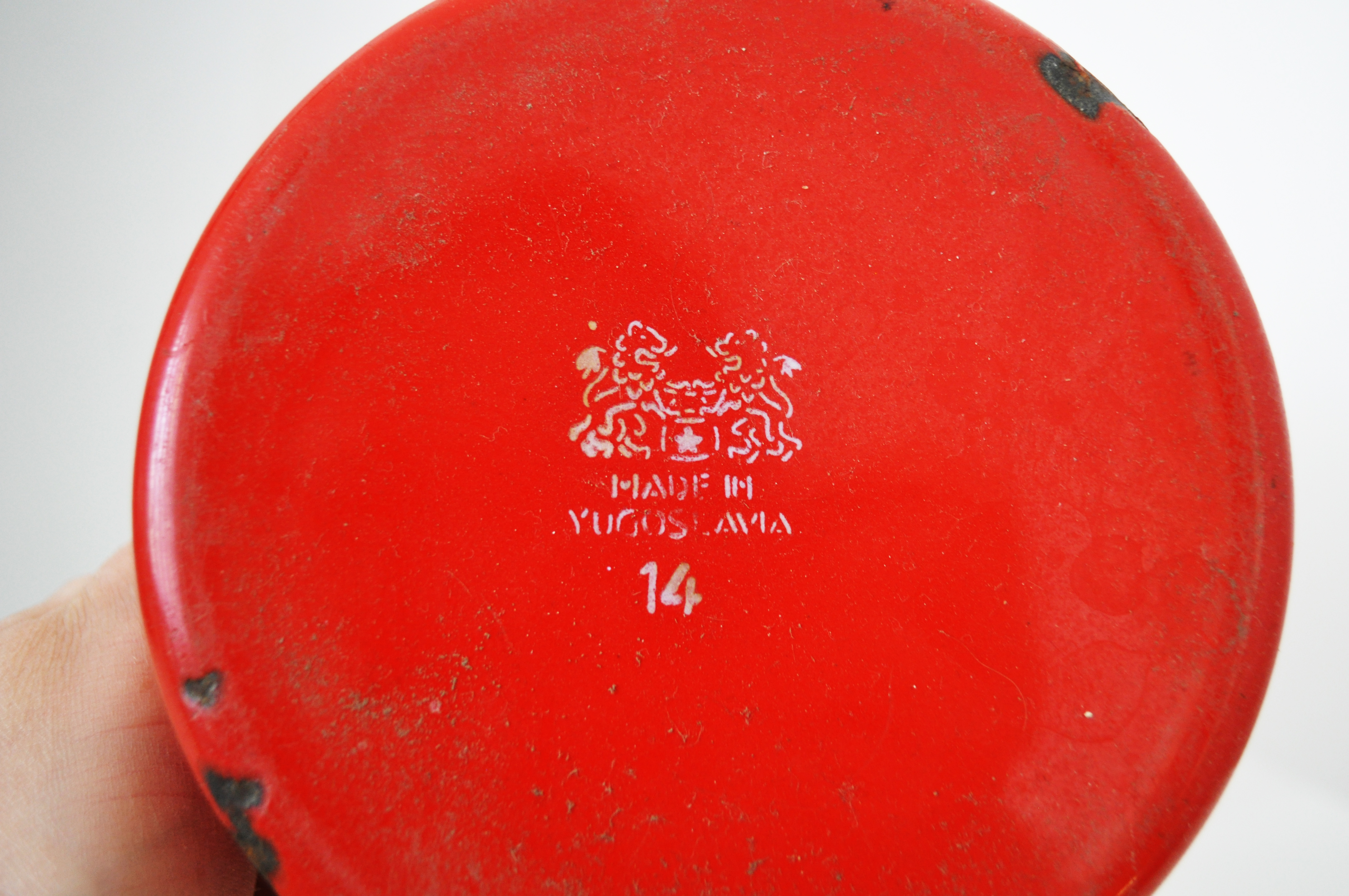
Enamelware is everywhere in Russia, Ukraine and the former Soviet republics. You also find it in the Balkans and as far away as Indonesia. In Western Europe, where it has a long history, it has been making a comeback in recent years.Proof that it really is everywhere: the Madacha team found a red enamelled steel mess tin and milk jug in our own garden. Two well-worn pieces, made in a country that no longer exists: Yugoslavia.
Frequently asked questions
- What is enamelled steel? Steel coated with a thin layer of glass, the enamel, fused onto the metal at around 800 °C.
- Can enamelware go on the hob or over a fire? Yes: campfire, gas, ceramic hob and, for most flat-bottomed pieces, induction. Never heat it empty.
- Can enamelware go in the microwave? No. It is metal: it can cause sparks and damage the appliance.Can the enamel chip? Yes, from a hard knock or a sudden change in temperature. The piece is still usable, but dry it well so the exposed steel does not rust.
- How old is enamel cookware? The first enamelled iron vessels date from 1785, in Germany. Enamelled sheet steel cookware spread from the mid-19th century.
Over to you
Do you have an enamel piece with a story behind it? Share it with us.